
Australia eVisitor Visa Subclass 651: Everything You Need to Know
If you hold a passport from an eligible European or designated country, you can visit Australia without going through a traditional visa application. The Australia eVisitor Visa (Subclass 651) is a free, electronic visa that lets you stay in Australia for up to three months at a time. It covers tourism, family visits, and some business activities. No paperwork. No embassy visit. Just an online application.
Here’s everything you need to know before you apply.
What Is the Australia eVisitor Visa (Subclass 651)?
The eVisitor Visa is a electronic travel authority issued by the Australian Department of Home Affairs. It’s linked to your passport electronically, so there’s no stamp or sticker — Australian Border Force can see it when you arrive.
It’s designed for short stays. You can visit for tourism, see family and friends, or attend business meetings. What you cannot do is work or study for more than three months.
The visa is valid for 12 months from the date it’s granted, and during that time you can enter Australia as many times as you want, as long as each stay is under three months.
Who Is Eligible for the eVisitor Visa?
Eligibility is based on your passport, not where you live. Citizens of eligible countries qualify regardless of whether they’re currently living in Europe, Asia, North America, or anywhere else.
The Subclass 651 is available to passport holders from countries including European Union member states, EEA countries, and a small number of other designated nationalities. The full and current list is maintained by the Australian Department of Home Affairs.
Important: If your country isn’t on the eligible list, you won’t qualify for the eVisitor Visa. You may be eligible for the ETA (Subclass 601) instead — or you may need to apply for a standard Visitor Visa (Subclass 600).
One thing that trips people up: holding a permanent residency in an eligible country doesn’t help. Only citizens of eligible countries qualify. Your nationality is what matters here.
eVisitor Visa (651) vs ETA (601): What’s the Difference?
Both visas do the same job — they let you visit Australia for short stays, electronically, without a traditional visa process. The main difference is which nationalities use which.
Here is the updated table with the government fee row removed:
| Feature | eVisitor Visa (Subclass 651) | ETA (Subclass 601) |
| Who qualifies | EU, EEA, and other designated passport holders | Citizens of specific countries including USA, Canada, Japan, Singapore, South Korea, and others |
| Application method | Online via our official portal | Online or through some airlines and travel agents |
| Linked to passport | Yes — electronic, no stamp | Yes — electronic, no stamp |
| Multiple entry | Yes | Yes |
| Max stay per visit | Up to 3 months | Up to 3 months |
In short: if you’re a European citizen, you’re on the 651 track. If you’re from the US, Canada, or certain other countries, you’re likely looking at the 601. If neither applies, you’ll need the Subclass 600.
Not sure which one applies to you? Check out our eVisitor Visa insights guide for more detail.
How Much Does the eVisitor Visa Cost?
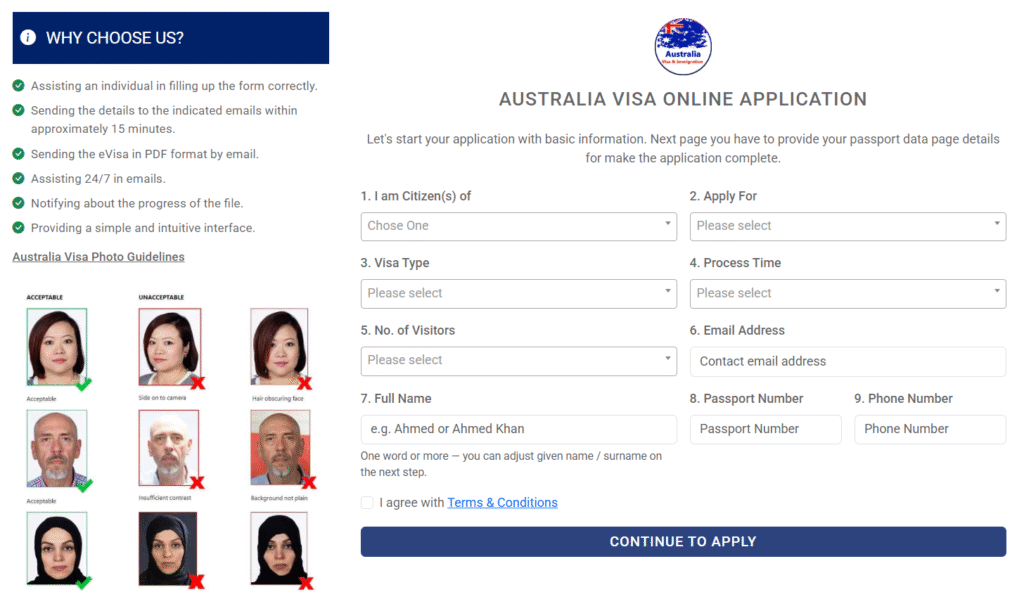
This visa is for passport holders from the EU, EEA, and other designated countries. The processing fee is £26 for regular processing and £49 for urgent processing. You can apply online through our official portal.
What Can You Do on the eVisitor Visa?
The eVisitor Visa covers a wider range of activities than most people expect — but it also has firm limits.
You can:
- Travel around Australia as a tourist
- Visit family or friends
- Attend conferences, business meetings, or negotiations
- Take part in short-term training that isn’t paid work
- Transit through Australia on your way to another country
You cannot:
- Work for an Australian employer (paid or unpaid work for an Australian company)
- Study for more than three months
- Provide any services for payment to anyone in Australia
- Carry out activities that could fill a position that an Australian resident might otherwise hold
The business visitor rules are worth highlighting because they confuse a lot of people. You can attend a conference, sit in meetings, or sign contracts — that’s fine. But if an Australian company would be paying you for your time or services while you’re there, that’s not covered under this visa.
How Long Does the eVisitor Visa Last?
The eVisitor Visa is valid for 12 months from the date it’s granted — not from the date you first travel to Australia.
During those 12 months, you can enter Australia as many times as you like. Each stay can be up to three months. Once you leave, the clock resets for your next visit.
Here’s a real example: Suppose your visa is granted on January 1. You fly to Sydney on February 10 and stay for six weeks, leaving in late March. You’re back home, and then you decide to return for another trip starting in July. As long as you leave before October 1 (the 12-month mark from grant), that second trip is perfectly fine — and you get another three months for that stay.
What you can’t do is stay for six months straight. Each continuous stay is capped at three months. After that, you’d need to leave.
One thing to plan around: the 12-month clock starts from when the visa is granted, not when you use it. If you apply well before your trip and then don’t travel for eight months, you only have four months of validity left when you finally arrive.
What Documents Do You Need?
The eVisitor Visa application is simple compared to most visa processes. Here’s what you’ll need ready before you start:
- A valid passport from an eligible country (make sure it won’t expire during or shortly after your trip)
- An email address (your visa confirmation and any correspondence will come here)
- Basic health and character declarations (standard questions about your health history and any criminal convictions)
- Rough travel plans (you don’t need confirmed bookings, but having an approximate itinerary helps)
- A payment method if using a third-party service
That’s genuinely it. There’s no requirement to show bank statements, employment letters, or return flight bookings at the application stage — though having a clear purpose for your visit is always a good idea.
Want a full walkthrough of how to fill in the application? Our guide on how to complete your Australia visa application online covers it step by step.
How to Apply for the Australia eVisitor Visa
Through our official portal If you’d rather have someone guide you through it — especially if you’re applying for the first time, services like Australia eVisitor Visa help you complete and submit your application correctly.
Either way, the visa is electronic. Once approved, it’s automatically linked to your passport. You don’t need to print anything or carry a visa document.
How Long Does It Take to Get Approved?
Honestly, it varies. Some applications are approved within hours. Others take a few days or longer, depending on your individual circumstances and the current volume of applications.
What we will say: don’t apply the day before your flight. Give yourself at least a couple of weeks, and more if your situation involves any complexity. Read more about how Australian visa processing times work before you plan your application date.
Common Reasons for Rejection (And How to Avoid Them)
Most eVisitor Visa applications are straightforward. But applications do get refused, and knowing why can help you avoid problems.
Criminal history: Australia has a character requirement. If you have a criminal record, you’ll need to disclose it. Not all convictions lead to a refusal, but failing to disclose them almost certainly will. If you’re concerned about how a past conviction might affect your application, read our guide on travelling to Australia with a criminal record before you apply.
Incomplete or inconsistent information: Small errors or contradictions in your application — like a name that doesn’t exactly match your passport — can cause delays or refusals. Double-check everything before submitting.
Previous visa violations: If you’ve overstayed a visa in Australia or another country, that history can affect your application.
Health considerations: There’s a basic health requirement for the eVisitor Visa. Most applicants pass without issue, but serious medical conditions may require further review.
Applying too early: Remember, the 12-month validity starts from the date of grant, not your travel date. If you get approved eight months before your trip, you’ll have less than four months of validity left when you actually travel. Time your application accordingly.
The genuine temporary entrant requirement: You need to genuinely intend to visit Australia temporarily. If your circumstances suggest you might not return home — strong ties to Australia, unclear reasons for visiting, previous overstays — that can lead to a refusal.
Can You Extend or Renew the eVisitor Visa?
No. The eVisitor Visa cannot be extended once you’re in Australia.
If you’re already in the country and want to stay longer than your visa allows, you can’t simply apply for an extension of the same visa. You’d need to apply for a different visa — most likely the Visitor Visa (Subclass 600) — from within Australia, before your current visa expires.
This is worth knowing in advance. If you think there’s any chance you’ll want to stay longer, plan for it before you go, not after you arrive.
Also worth noting: if your passport expires while you’re in Australia, your eVisitor Visa is tied to that passport. You’d need to get a new passport and have your visa transferred or apply again. Don’t let your passport expire mid-trip.
Frequently Asked Questions
Can I work in Australia on the eVisitor Visa? No. The eVisitor Visa does not allow paid work of any kind. If you work for an Australian employer or provide services for payment, you’re in violation of your visa conditions.
Can I study on the eVisitor Visa? You can study for up to three months. Longer than that, and you’d need a student visa.
Can I apply for family members on the same application? Each person needs their own separate application. Family members can apply at the same time, but each application is assessed individually.
Is the eVisitor Visa the same as a tourist visa? It’s often used for tourism, but it’s more than just a tourist visa. It covers tourism, family visits, and some business activities. Think of it as a short-stay visitor visa for eligible nationalities.
What if I need travel insurance? The eVisitor Visa doesn’t require you to have travel insurance, but it’s strongly recommended. Medical costs in Australia can be significant. Take a look at travel insurance options for Australia before your trip.
What if my passport expires before my return date? Your eVisitor Visa is linked to the passport you used when you applied. If your passport expires, the visa becomes unusable on that passport. Make sure your passport is valid for the full duration of your stay — and ideally a few months beyond.
Ready to Apply?
The eVisitor Visa (Subclass 651) is one of the simplest ways to visit Australia if you hold an eligible passport. No embassy, no paperwork.
You can apply directly through Australia eVisitor Visa, we are here to help.
Either way, give yourself enough time before your trip, check that your passport is from an eligible country, and answer every question on the application honestly and accurately. That’s really all it takes.