
For most UK passport holders, the Australia eVisitor visa processing time is anywhere from a few minutes to around 24 hours. Many applications are decided almost instantly after submission. A smaller number get referred for manual review, which can stretch to a few days. In rare cases involving additional checks, it can take up to a week or slightly longer.
That is the short answer. The rest of this article covers what affects your timeline, when to apply before your trip, and what to do if things take longer than expected.
What Processing Time Actually Means
Processing time is counted from the moment you submit a complete application, not from when you start filling out the form. The Department of Home Affairs reviews your application and, if everything checks out, issues a decision.
One thing worth knowing: the eVisitor visa is entirely electronic. There is no visa sticker in your passport and nothing arrives in the post. When your application is approved, you receive a Visa Grant Notification by email, and the visa is linked directly to your passport number. That email is your confirmation. Until it lands in your inbox, your application is still pending, regardless of how long it has been.
Typical Processing Time for UK Applicants
Most eVisitor (Subclass 651) applications process within minutes to 1 day. Many applicants receive a decision shortly after submission, though individual cases can vary.
Some applications are auto-granted within minutes. Others are referred for manual processing, which can take a few days. In practice, the longest eVisitor processing times tend to be around one week.
UK applicants generally sit at the faster end of this range. UK applicants see a refusal rate of around 1%, which reflects how straightforward most British applications are. If your documents are in order and there are no flags on your application, you will likely have your grant notification the same day.
How Far in Advance Should You Apply?
Even though most applications are turned around quickly, applying early is always the smarter move. Things can go wrong, documents can be queried, and there are peak periods when volumes are higher than usual.
A good rule of thumb for UK travellers is to apply at least two to four weeks before your departure date. This gives you a comfortable buffer if your application requires manual review or if the Department comes back with a request for more information.
If you are booking flights and hotels, try not to finalise non-refundable reservations before your visa is confirmed. Avoid non-refundable commitments unless you accept the risk that the application may not be decided before the planned travel date.
The busiest periods for Australian tourist visa applications from the UK tend to cluster around the summer school holidays (July and August), the Christmas and New Year window, and Easter. If you are travelling during any of these periods, applying a month or more in advance gives you the most peace of mind. For more on what the full application process looks like, take a look at how to apply for the eVisitor visa from the UK.
What Can Slow Your Application Down
Most delays come down to a handful of reasons, and nearly all of them are avoidable.
Errors in the application. A misspelled name, a passport number entered incorrectly, or a date of birth that does not match your travel document can trigger a manual review or a request for clarification. Double-check every field before you hit submit.
Passport name discrepancies. If the name on your application does not exactly match the name in your passport, including middle names or suffixes, the system can flag it. Use your name exactly as it appears on your passport.
Criminal history declarations. Declaring a criminal conviction triggers manual assessment. This does not automatically mean a refusal, but it does mean a human will review your application rather than the system handling it automatically.
Security or watchlist matches. If your name is similar to someone flagged on a security or immigration watchlist, your application may be referred for manual processing. This is more common than you might think with common European names.
Previous visa refusals. If you have had a visa refused for Australia or another country, your application is more likely to go through additional checks.
Weekend and public holiday submissions. While applications can be submitted online any day, official processing may pause on weekends or public holidays. If you apply on a Friday afternoon or over a bank holiday weekend, you may wait until the next working day before anything moves.
Peak application volumes. During busy travel seasons, the sheer volume of applications means processing can slow across the board, even for straightforward cases.
For context on how the Australia eVisitor visa processing time compares to other visa types, including longer-stay options, that article covers the full picture.
How to Check the Status of Your Application
Once you have submitted your application through ImmiAccount (the Department of Home Affairs online portal), you can log back in at any time to check your application status. The status will typically show as “received,” then update as your application moves through assessment.
You can also track your application through the status check tool on this site, which can give you a quick read on where things stand.
One important note: a status of “received” means the Department has your application. It does not mean it has been assessed or approved. Wait for the grant notification email before assuming you are good to go.
If Your Visa Is Taking Longer Than Expected
Try not to panic. A few practical steps can resolve most situations.
First, check your spam and junk folders. Visa grant notifications come from a Department of Home Affairs email address, and they do occasionally end up filtered. This is more common than people expect.
Second, confirm that the passport details on your application were entered correctly. If there is an error, that is likely why the application is sitting in a queue waiting for clarification.
Third, if you are past the typical window and have an upcoming travel date, contact the Department of Home Affairs directly to flag the urgency. Do not submit a second application, as duplicate applications can cause further delays.
If your travel date is genuinely imminent and you have not heard anything, you can also contact the nearest Australian High Commission in London. They cannot speed up Home Affairs decisions, but they can advise on your options.
eVisitor vs. ETA: Quick Comparison
UK travellers sometimes see references to the Electronic Travel Authority (ETA, Subclass 601) and wonder if it applies to them. It does not. The eVisitor (Subclass 651) is the correct visa for British passport holders. Here is a quick breakdown of the two:
| Feature | eVisitor (Subclass 651) | ETA (Subclass 601) |
|---|---|---|
| Who it is for | European passport holders including UK | US, Canada, Singapore, Japan, and others |
| How to apply | application.applyaustraliavisa.com | Australian ETA app |
| Processing time | Minutes to 1 day (most cases) | Minutes to 1 day (most cases) |
| Number of entries | Multiple | Multiple |
| Stay per visit | Up to 3 months | Up to 3 months |
| Validity | 12 months from grant | 12 months from grant |
A common mistake is using the Australian ETA app to apply for an eVisitor. That app is for Subclass 601 applicants only. UK applicants need to go through ImmiAccount on the Home Affairs website.
For full details on the Subclass 651, including eligibility and what you can and cannot do on this visa, see the Australia eVisitor visa Subclass 651 guide.
Ready to Apply?
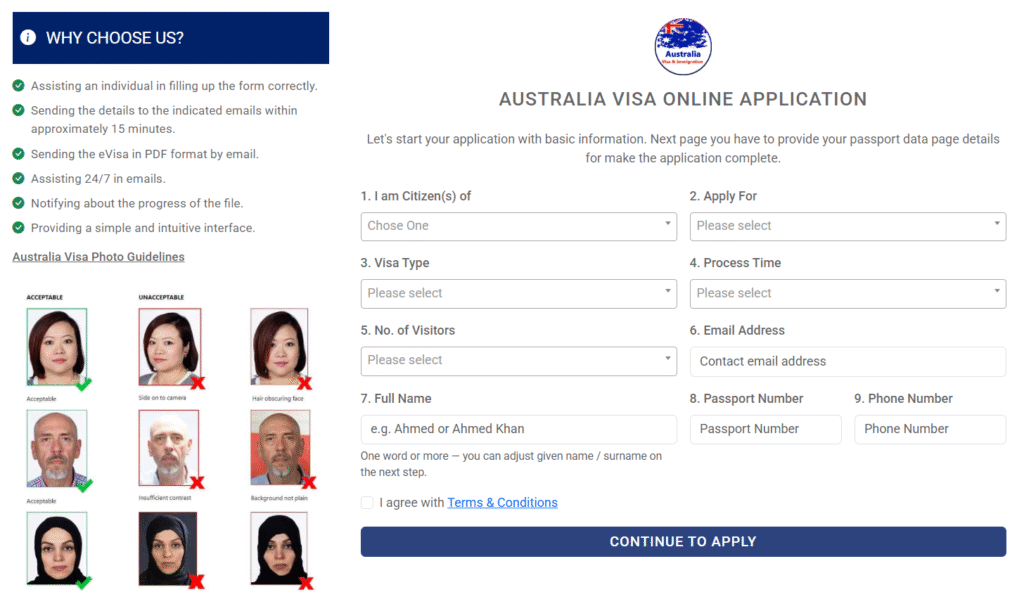
If you would rather have someone handle the application for you, Australia eVisitor Visa can take care of the process on your behalf. You provide your details, they handle the submission, and you receive confirmation when your visa is granted.
You can learn more and get started at the Australia eVisitor visa for UK citizens page, or visit the UK Australia visa information page if you want to compare your options first.